

Walking into a home furnishing store or online marketplace, the myriad aromatherapy diffusers on offer are always eye-catching—minimalist Nordic-style designs, retro ceramic models, smart models with ambient lighting... However, many people excitedly place orders only to find that "ideals are high, reality is low": the diffusion range is too small, noise disrupts sleep, and malfunctions frequently occur after just a few uses. The key to choosing the right aromatherapy diffuser lies in avoiding common misconceptions and accurately matching it to your needs.
Misconception 1: Focusing solely on appearance while ignoring the core "diffusion capability"
Many people are drawn to the appearance of a diffuser, forgetting that its core function is "diffusion." A reader once reported that they bought a popular ceramic diffuser in their bedroom, but only smelled the fragrance around the diffuser itself, with little noticeable effect at the foot of the bed—a classic example of "appearance over performance" being the main factor.
To judge diffusion capability, two key parameters should be considered: atomization volume and the area it can be used for. Generally speaking, small spaces like bedrooms (10-20 square meters) are suitable for models with a mist output of 10-30 ml/h, while larger spaces like living rooms (20-40 square meters) require a mist output of 30-50 ml/h. If a product is labeled "suitable for areas over 50 square meters," be wary of potential misrepresentation and prioritize brands with third-party testing reports.
Furthermore, the diffusion method also impacts the experience. Ultrasonic atomization (which uses high-frequency vibrations to break down water and essential oils into small molecules) is gentle and suitable for everyday aromatherapy. Thermal diffusion (which uses heat to evaporate essential oils) is less expensive, but high temperatures can destroy the active ingredients in the oils and is more suitable for temporary use on a limited budget.
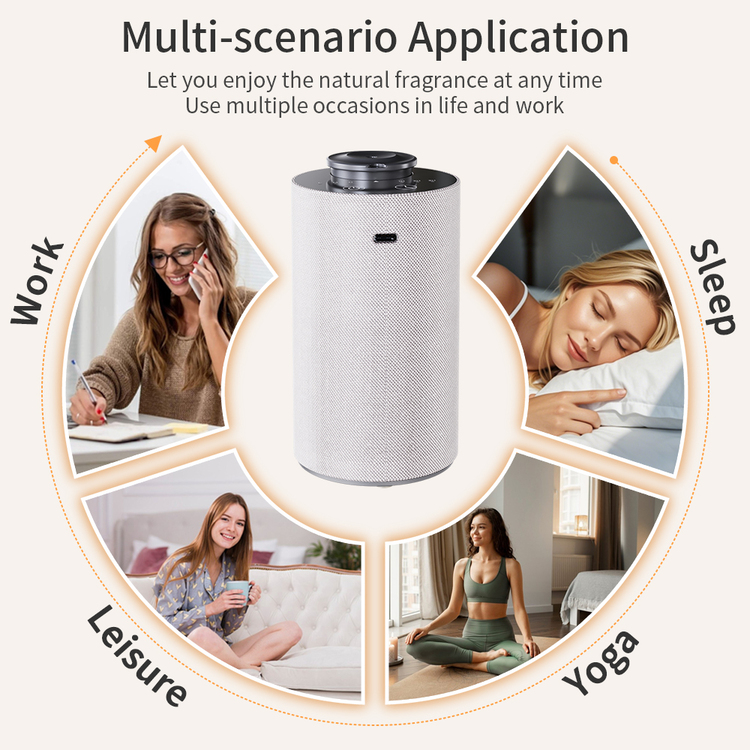
Misconception 2: Blindly pursuing "multi-functionality" while ignoring the intended use
Today's aromatherapy diffusers are becoming increasingly sophisticated. Beyond just diffusion, they also come with features like ambient lighting, Bluetooth speakers, and humidity indicators. However, more features aren't necessarily better; the key is whether they fit your specific use case. For example, if you want a sleep aid in your bedroom, "noiselessness" and a timer function are more important than a Bluetooth speaker. We recommend choosing a model with a noise level of ≤30 decibels (equivalent to a whisper) and a 1-4 hour timer to prevent the water tank from drying out at night. For an office, prioritize a compact model with a USB port for easy connection to a computer and to avoid overly bright ambient lighting that can disrupt work concentration.
Another often overlooked detail: the water tank capacity. For bedroom use, choose a 200-300ml capacity (a full tank provides 4-8 hours of use) to avoid frequent refills. For a living room or for extended use, opt for a larger tank of 500ml or more to minimize operational hassles.
Misconception 3: Ignoring material safety can lead to health risks.
Aromatherapy diffusers are exposed to water and essential oils for extended periods, so material safety is directly related to health. Many low-priced products use low-quality plastics, which can release harmful substances when exposed to heat or corroded by essential oils, making them particularly unsafe for the elderly, children, and pregnant women. When choosing a diffuser, pay attention to the materials of three components: The water tank should preferably be made of food-grade PP or borosilicate glass, which are acid- and alkali-resistant, easy to clean, and prevent essential oil residue contamination. The atomizer should be made of ceramic, which is more durable than metal atomizers and less susceptible to scale buildup. If the housing is made of plastic, confirm that it is ROHS certified to prevent odor or the release of harmful substances.
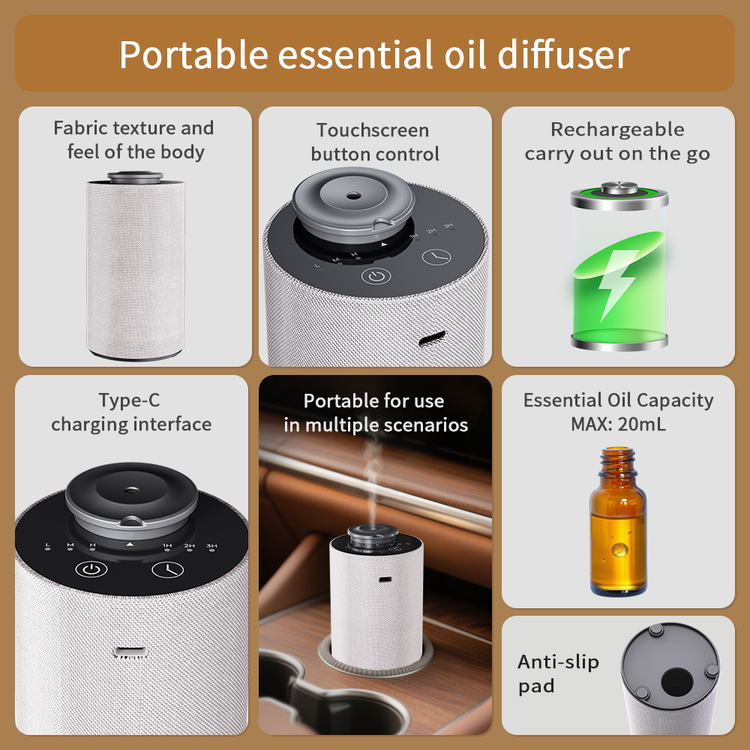
Easy cleaning is also important. It's recommended to choose a model with a large, disassembled water tank opening. Regularly clean scale with citric acid solution to prevent clogging the atomizer holes and affecting the diffusion effect, thereby extending the lifespan of the device.
Choose the right model based on your core needs for more therapeutic aromatherapy.
There's no "best" aromatherapy diffuser, only the "most suitable." If you're looking for value, opt for a basic ultrasonic diffuser. If you value a sense of ritual, a glass model with gradient ambient lighting can enhance the style of your space. If you have pets or children at home, prioritize safety features like an automatic power-off function for water shortages.
The essence of an aromatherapy diffuser is to help us find moments of peace in our busy lives—choose the right one, and let every breath become the beginning of healing.